Sri Lanka 2026
Mark Finn
Photos: Eduardo Garcia del Rey
January 7th-20th
This was the first tour back to Sri Lanka after several years which had been completely modified to include rarely visited areas of the northwest around Mannar and Wilipattu. These two areas proved to be a hotbed of migrant species and scarce island birds which are generally absent from the south. From the north we visited the more familiar areas in the dry and wet zones including Sinaraja, Yala, Bundala and Sigiriya. The final number of birds observed was 255 species an impressive total which was attained by visiting the north which is open fully after the thirty years of conflict which ended earlier in the century. Mammals also featured with sightings of Leopard and Sloth Bear the latter is rarely seen on any tours.
My thanks go out to Melissa for the ground arrangements within the country and our excellent guide Thilanka who without his knowledge and skills in both mammals and birds made the tour a huge success.
The next trip is planned for January 2027 with a maximum of 6 clients and the guides
January 7th: Tamarind Tree Hotel
Daily 26 New 26 Running 26
Weather: Overcast with NW winds 30c
Due to various flight times into Colombo we started birding at 1600 hours with a walk around the extensive gardens of the resort. A slow walk enabled us to observe the commoner birds of Sri Lanka which included Brown-headed Barbet, Spotted Dove, Common Myna, Yellow-billed Babbler, House and Large-billed Crows, Rose-ringed Parakeet and Red-vented Bulbul. A bonus was a pair of Collared Scops Owls roosting in a leafy tree. Other interesting species included Oriental Magpie Robin, Common Tailorbird, Black-headed Oriole, Loten’s and Purple-rumped Sunbirds, Pale-billed Flowerpecker and a single Brahminy Kite. As the light faded we went back to our rooms and afterwards to dinner.
Mammals: Palm Squirrel (c)
January 8th: Tamarind Tree Hotel, Mahawewe, Chilaw, Chilaw Beach
Daily 49 New 27 Running 53
Weather: Overcast with showers and sunny spells on a NW wind 27c
After breakfast a walk around the gardens had similar birds to yesterday with the addition of White-throated Kingfisher. At 10am a departure north along the coast road towards the town of Chilaw. The route north passes through suburbs of Colombo with open areas attracting Eastern Cattle Egret, Red-wattled Lapwing and the commoner birds. Just before the town of Mahawewe a stop to scan across the tank for birds. In the denser area of vegetation we quickly located Intermediate and Little Egrets, Indian Pond Heron, Grey-headed Swamphen, Black-headed Ibis, Blue-tailed Bee-eater and Barn Swallows. On the tank and adjoining dead trees the group found the uncommon Great Cormorant, Indian and Little Cormorants, Oriental Darter, Whiskered Tern and hunting Brahminy Kites. Further along the road the first Oriental Openbill of the tour. The bustling town of Chilaw was passed by until we reached the shores of the Indian Ocean. The sandy beach and rocks meant it would be hard work for birds although good numbers of Gull-billed and Greater Crested Terns were present. The only waders present were Whimbrel which appeared to be common in the area feeding on small crabs and crustaceans. A beachfront garden held Indian Rollers and Asian Palm Swifts around the palm trees. Lunch was taken and then out at 1600 hours. The beach had fewer birds until an exploration of a grassy sandy area was made. A careful look revealed Jerdon’s Bushlark, Paddyfield Pipits and Scaly-breasted Munia. A surprise find was a Red-rumped Swallow flying east.
Mammals: Palm Squirrel (c)
January 9th: Anawalundawa Sanctuary, Puttalem Saltpans, Wilipatu National Park
Daily 92 New 46 Running 109
Weather: Overcast with occasional rain showers on a NE wind 26c
An early departure from Chilaw to Anawlundawa was the first birding stop. On arrival dozens of Painted Storks were leaving their roost sites in the dead trees. The more widespread egrets and herons were present in numbers along with House Swifts and a calling Greater Coucal. A walk along the bund was productive for Eurasian Spoonbill, Lesser Adjutant, Stork-billed and White-throated Kingfishers, Pheasant-tailed Jacana, Black-winged Stilt and a perched Shikra. A tree attracted wintering Blyth’s Reed Warbler, Common Tailorbird and a pair of Sri Lanka Woodshrikes. On another section of exposed mud and low vegetation we located Grey-headed Swamphens, Common Redshank, Common Greenshank, Green and Wood Sandpipers and Tibetan Sandplover. On the return walk a pair of Jerdon’s Leafbirds, Indian Paradise Flycatcher and a perched Grey-headed Sea Eagle. Next on the agenda was the saltpans at Puttalem where on arrival a marsh had Yellow Bittern and Plain Prinia. On the pans Gull-billed, Whiskered, Common and Little Terns, Little Ringed Plover and two unidentified waders. Lunch was taken at the hotel followed by a visit to Wilipatu NP. The first of several jeep safaris started well with close views of Changeable and Crested Serpent Eagles, Asian Woolly-necked Stork and Sri Lanka Grey Hornbill. An open area attracted Paddyfield Pipit and Jerdon’s Bushlark, Asian Green and Blue-tailed Bee-eaters. In a nearby patch of forest we could hear Sri Lanka Sharma although a bonus came shortly afterwards with sightings of Orange-headed Thrush and Forest Wagtail. On another track brief views of Common Iora, Brown Shrike and the loud songs of Fork-tailed Drongo Cuckoo. Back to the park headquarters with sightings of Sri Lanka Junglefowl being the highlight.
Mammals: Palm Squirrel (c), Giant Squirrel (1), Ruddy Mongoose (2), Torque Macaque (20), Sloth Bear (1), Leopard (1), Black-naped Hare (1), Spotted Deer (50), Star Tortoise (1), Muggar Crocodile (1), Land Monitor (1)
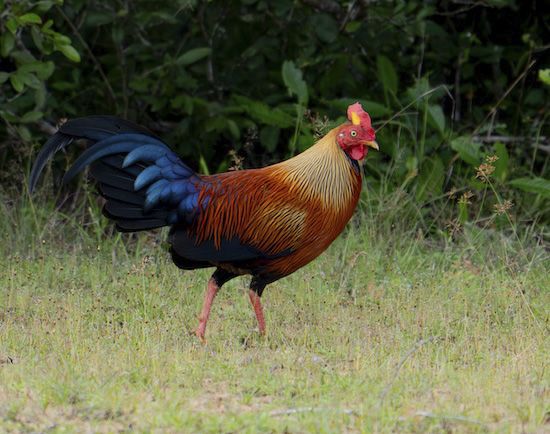
Junglefowl
January 10th: Wilpattu National Park, Mannar
Daily 89 New 29 Running 138
Weather: Overcast with frequent rain showers on a NE wind 24c
Malabar and Sri Lanka Grey Hornbills were seen leaving their roost outside the hotel grounds. On the way to Wilpattu roadside wires attracted the endemic Sri Lanka Green Pigeon. In the park an area near the parking lot attracted Indian Robin, Indian Paradise Flycatcher, White-browed Fantail and the commoner species. It was time to board the jeeps again for another safari. A little luck in finding Oriental Dwarf Kingfisher and close views of Sri Lanka Shama, Brown-capped Babbler and Asian Woolly-necked Stork. In another sector we witnessed the unusual sight of a Crested Serpent Eagle consuming a snake (tail first). Packed breakfast taken in an open area of grassland where Jerdon’s Bushlark and Paddyfield Pipit were present along with Asian Green Bee-eater, Red-backed Flameback, Common Iora, and overhead White-bellied Sea Eagle, Barn Swallow and Crested Tree-swifts. On another track close views of Pin-tailed Snipe and Grey-bellied Cuckoo. On the way back a Besra was briefly seen diving into a bush and a Large Cuckooshrike on the edge of a large tree. Lunch was taken and then the road north to Mannar which is mainly Tamil. A short stop at a tank and rice field was productive for Pheasant-tailed Jacana, Plain Prinia, Blyth’s Reed Warbler and Speckled Weaver the latter constructing nests. In the scrubby patches a trio of Scaly-breasted, Tricoloured and White-rumped Munias. Next stop was south of Mannar where roadside wires and trees attracted Coppersmith Barbet and Black Drongo. The last stop before the bridge to Mannam was flooded fields which were a magnet for Common Teal, Garganey, Northern Shoveler, Northern Pintail, Eurasian Wigeon, Lesser Whistling Duck, Grey-headed Swamphen, Common Moorhen, Little Grebe and waders including Marsh Sandpiper and Ruff.
Mammals: Palm Squirrel (c), Ruddy Mongoose (2), Torque Macaque (1), Spotted Deer (c), Star Tortoise (1), Mugger Crocodile (2), Barking Deer (1), Water Buffalo (6), Grey Langur (20)
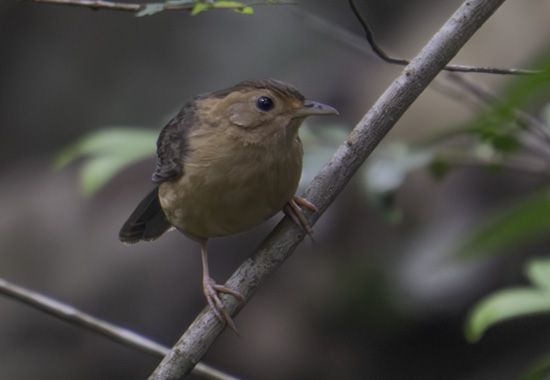
Brown-capped Babbler
January 11th: Mannar, A14 road to Adams Bridge via beaches and roadside lagoons, Vankalai
Daily 86 New 28 Running 166
Weather: Hot and sunny with light NE winds 32c
Our main objective this morning was to visit birding areas along the A14 road and the extensive mudflats and lagoons at Adams Bridge. Outside the hotel we had sightings of the locally uncommon Black Kite and Caspian Tern. On leaving the city limits the road passes through an extensive area of seasonally flooded fields and lagoons. Species of interest included Black-tailed Godwit, Common Greenshank, Marsh and Curlew Sandpipers, Common Redshank and Tibetan Sandplover. The common ducks and cormorants were widespread and abundant along with a few Great Thick-knees. Passerines were generally in short supply but included Zitting Cisticola, Brown Shrike, Indian Robin and Rosy Starling. A detour towards the beach area passed through coconut plantations where we located Black-rumped Flameback. It was then our attention turned towards the beach where fishermen were hauling in the days catch. On the beach hundreds of Little and Great Egrets, Brown-headed Gulls, Brahminy Kites and a few turns looking for discarded fish. Offshore was productive for Common, Whiskered, Bridled, Gull-billed, Lesser Crested and Caspian Terns, Heuglin’s Gulls, a bonus was a Black-headed Gull a rare visitor to the island. On a connecting road we could hear Greater Coucal and observed two Blue-faced Malkohas, Blue-tailed Bee-eaters, Common Tailorbird, and a Black Drongo. The last birding stop was at Adams Bridge which is reached by a sandy track running through scrub. In the scrub the group located White-browed Bulbul, Brahminy Starling, Blyth’s Reed Warbler and an unidentified Lesser Whitethroat. At the end of the track a vista across the bay and mudflats which were a magnet for birds. Species of interest included Greater and Tibetan Sand-plovers, Ruddy Turnstone Pacific Golden Plover, Bar-tailed Godwit, Whimbrel and the orientalis race of Eurasian Curlew. It was starting to get hot as we travelled back to Mannar. In the afternoon we have a visit to wetlands south of Mannar at 1600 hours. Vankalai is internationally important for birds and a Ramsar site. On arrival we witnessed literally hundreds of ducks including Garganey, Northern Shoveler, Northern Pintail and Eurasian Wigeon. Herons and egrets were widespread with high numbers of Eurasian Spoonbills. Further down the road shallow areas of water and exposed mud attracted many waders. Careful scanning of the flocks revealed Black-tailed Godwits, Tibetan Sandplover, Kentish and Common Ringed Plovers, Curlew and Marsh Sandpipers and importantly scarcer species in Broad-billed and Terek Sandpipers. Several raised areas were attractive to terns including Caspian, Common, Whiskered, Little, Saunders and White-winged. Large numbers of gulls were also using the area with Heuglin’s being the most numerous with Brown-headed Gulls. The light started to fade when a pair of Grey Francolin was located by the main road a fitting end to the day.
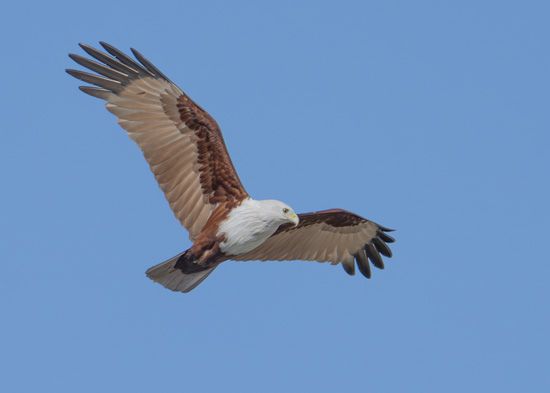
Brahminy Kite
January 12th: Mannar, Sigiriya, Minneriya NP
Daily 64 New 13 Running 179
Weather: Rain in the morning followed by sunny spells and showers on a N wind 27c
Sigiriya was our destination today and is famous for its rock. The usual birds were around Mannar and as we went south rain started to fall heavily. A brief stop along the A11 overlooking a tank had a single Sri Lanka Swallow, Cotton Pygmy Geese and the common waterbirds. The road towards our hotel was productive for Plain, Ashy and Jungle Prinias, Greater Coucal, Yellow-eyed Babbler, White-rumped and Tricoloured Munias. In the hotel grounds we located Indian Pitta, Indian Paradise Flycatcher and Tickell’s Blue Flycatcher. After lunch a visit to Minneriya National Park which was bad for too many jeeps and people. Best birds here were Crested Serpent Eagle, Common Iora and a pair of Black-headed Cuckoo-shrikes. I decided to cut our losses and head to Sigiriya Fort and the surrounding forest. The plan come off as we were greeted by Brown-headed and Crimson-fronted Barbets, Black-winged Kite, Green Warblers and Sri Lanka Green Pigeons.
Mammals: Palm Squirrel (c), Purple-faced Langar (2), Asian Elephant (4)
January 13th: Sigiriya, Kitulgala
Daily 48 New 7 Running 186
Weather: Sunny with afternoon rain showers on a N wind 26c
Travel day to Kitulgala and access to an area of pristine rain forest. In the garden the group added two endemic bird species in Legge’s Flowerpecker and Yellow-fronted Barbet. After crossing the river and entering the village we met up with our local guides to explore the forest. It did not take long before we were watching the extremely rare and little known Sri Lankan Bay Owl. Further into the forest a male Serendib Scops Owl was observed sitting quietly in a small tree. The weather worsened with rain showers but it did not deter us from observing a pair of Sri Lankan Frogmouths near a large tree. Back to the village where we added Square-tailed (Black) Bulbul, Brown-breasted Flycatcher, Emerald Dove and groups of Sri Lankan Hanging Parrots.
Mammals: Palm Squirrel (c) Torque Macaque (c)
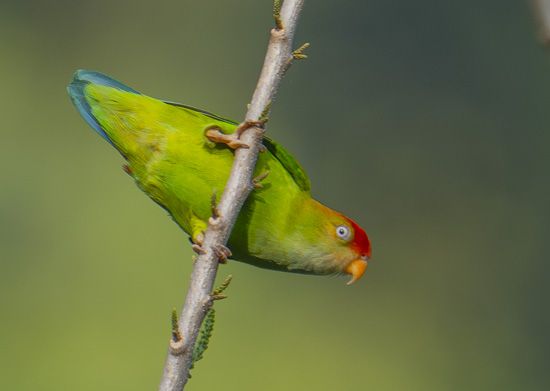
Hanging-parrot
January 14th: Kitulgala, St Clair, Nuwara Eliya, Pedro Estate
Daily 58 New 15 Running 201
Weather: Sunny at lower levels, cloudy at Nuwara Eliya on a NE wind 20c
Return visit to the village this morning at 7am. On the river edge a Grey Wagtail was added to the list with Common Kingfisher and Brown Shrike in bushes. In the village close views of Sri Lanka Grey Hornbill sitting quietly in a tree. Also present were Sri Lanka Swallow, Asian Palm Swift, Indian Swiftlet, Brown-breasted Flycatcher and Red-backed Flameback. A short ride in a tok-tok took us to another place where good views of the shy and skulking Green-billed Coucal were made. Also in the area were White-browed Bulbul, Orange Minivet and Black-headed Oriole. On the return walk a pair of Black-headed Cuckooshrike, Square-tailed Bulbul and eventually the endemic Chestnut-backed Owlet. Before going back to the ferry Orange-billed Babbler, Spot-winged Thrush and Black-capped Babbler were added to the list. A late breakfast was delayed by a pair of Chestnut-backed Owlets in the car park. On the way to Nuwara Eliya which is situated in the Highlands and the centre of the islands tea production region. A stop at St Clair with a tiny remnant patch of forest was productive for Sri Lanka Scimitar Babbler, Cinereous Tit, Oriental White-eye and Loten’s Sunbird. Checked in at the hotel with a late lunch and out again at 1600 hours. Pedro Estate is mainly a tea plantation with patches of natural forest. A short walk was productive for a female Indian Blue Robin, Green Warbler, Velvet-fronted Nuthatch, Grey-headed Canary Flycatcher, Bar-winged Flycatcher Shrike, Sri Lanka White-eyes and Oriental Magpie Robins. On returning to the bus we were fortunate to see Sri Lanka Woodpigeon feeding in a fruiting tree. Later we visited another area of the estate where we heard the rare and localised Sri Lanka Thrush and observed a party of Yellow-eared Bulbuls.
Mammals: Palm Squirrel, Torque Macaque, Purple-faced Langur (Highland race)
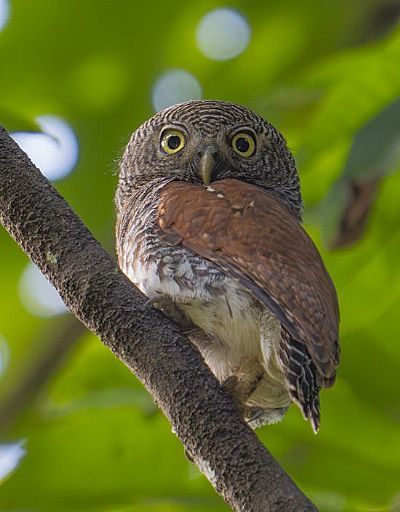
Chestnut-backed Owlet
January 15th: Nuwara Eliya, Horton Plains NP
Daily 47 New 11 Running 212
Weather: Cool at higher elevations 5c, lower down 18c on a NE wind with mixed conditions
The group left the hotel at 0500 hours for Horton Plains a reserve of forest patches, small ponds and grassland. At first light we were by a pond surrounded by mature trees and scrub. Indian Blackbirds were common along the entrance road. By the pond a male Sri Lanka Whistling Thrush called and showed well for everybody involved. Also present were Grey Wagtail, Large-billed and Green Warblers, Yellow-eared Bulbul, Dull-blue Flycatcher, Sri Lanka White-eye and Cinereous Tit. A short walk up the road added a female Sri Lanka Whistling Thrush which is rarely seen plus Black Eagle, Velvet-fronted Nuthatch, calling Sri Lanka Woodpigeons, Orange Minivets and the skulking and scarce Sri Lanka Bush Warbler. Beyond the forest areas of grassland and old buildings attracted Hill Swallow, Pied Bushchat, Paddyfield Pipit, Tricoloured Munia, Indian Peafowl, Zitting Cisticola and Large-billed Crow. On the return journey a juvenile Common Hawk Cuckoo was located sitting on a dead branch. Back to Nuwara Eliya and out again at 1530. Victoria Park as the name suggests was established under the reign of Queen Victoria. Along the river we found Grey Wagtail, Common Sandpiper, White-breasted Waterhen, Grey-headed Canary Flycatcher and the globally endangered Kashmir Flycatcher. In another area of the park a berry laden tree attracted Pied Thrushes, Sri Lanka Scimitarbill and Brown Shrike.
Mammals: Giant Squirrel (2) Black-naped Hare (1) Dusky-striped Squirrel (4) Little Ringed Civet Cat (1) Samba Deer (c) Brown Mongoose (1)
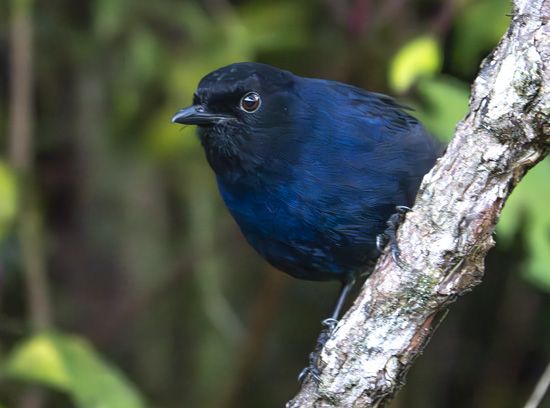
Whistling Thrush
January 16th: Nuwera Eliya, Hakkala Botanical Gardens, Tissamaharama
Daily 48 New 7 Running 219
Weather: Sunny with light NE winds 10c-25c
Our first stop today was the botanical gardens at Hakkala. The gardens were very quiet for birds although the nearby forested cliffs attracted Crested Goshawk and Oriental Honey Buzzard. Our journey south was to Tissamaharama and area of tanks, woodland and gardens in the dry zone of Sri Lanka. Out at 1530 hours to visit various gardens where we located Brown Fish Owl, Collared Scops Owl, Jungle Owlet and Brown Boobock all at daytime roosts. This was an amazing experience for birds associated with night time activities. At the end of the afternoon we witnessed a pair of White-naped Woodpeckers at their nest hole high up in a coconut tree. The pair swapped over nest duties after around forty minutes which gave us excellent views. Before dinner we made another short diversion to observe the localised Eastern Barn Owl.
Mammals: Torque Macaque (c) Grey Langur (10), Purple-faced Langur (6), Dusky-striped Squirrel (1)
January 17th: Bundala, Yala
Daily 116 New 21 Running 240
Weather: Warm and sunny on a NE wind 26c
A visit to the coastal reserve at Bundala is always a rewarding experience and today was no exception. In the flooded fields before the entrance a female Watercock was noted walking across the field. In the distance we located an immature Black-crowned Night Heron and in the reedbeds a wintering Clamerous Reed Warbler. In the drier areas we heard a singing Oriental Skylark and recorded the first Yellow-wattled Lapwings of the tour. Wintering Rosy Starlings and Sand Martins were also present. Beyond the park entrance the group added new species notably Indian Thick-knee and close views of the skulking Blue-faced Malkoha. Breakfast was taken by the beach when a Western Marsh Harrier flew overhead with Brahminy Kites, Caspian and Greater Crested Terns. The saltpans were next on the agenda and brimming with wintering waders. The common species were Curlew and Marsh Sandpipers, Little Stint, Tibetan Sandplover, Common Redshank and Common Greenshank. Unusual sightings included a party of five Red-necked Phalaropes, Greater Sandplover, Ruddy Turnstone, Grey Plover and Ruff. On the return journey an Osprey was located sitting in a dead tree. In the afternoon a visit to Yala is planned. Yala was reached at 1445 and we started our exploration of the park. Chestnut-headed Bee-eater was noted before the park gate and shortly afterwards a pair of Small Minivets. Many birds were present and we had to wait until an area of grassland yielded two Richard’s Pipits and a female Yellow-crowned Woodpecker in a dead tree. Nearby a large tank attracted the huge Black-necked Stork our last bird of an incredible day of birding in Sri Lanka.
Mammals: Ruddy Mongoose (2) Brown Mongoose (1) Black-naped Hare (1) Spotted Deer (c) Mugger Crocodile (5) Land Monitor (3) Water Buffalo (c) Asian Elephant (6) Samba Deer (10)
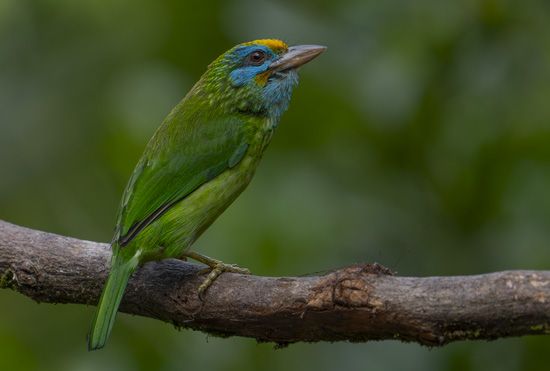
Crimson-fronted Barbet
January 18th: Tissamaharama, Sinarajah
Daily 67 New 6 Running 246
Weather: Warm and sunny with light NE winds 26c
We left Tissamaharama in the dry zone for Sinarajah one of the wettest areas situated in the wet zone. The usual birds were around the tanks and gardens and we stopped to observe good numbers of Pheasant-tailed Jacanas on a lily-covered tank. A few short stops were made until reaching Sinarajah in time for lunch. A fruiting fig tree outside the lodge attracted Brown-headed and Crimson-fronted Barbets, Jerdon’s Leafbird, Black-hooded Oriole and Square-tailed Bulbuls. Just up the road the endemic Sri Lanka Hill Myna was seen and heard. In the skies overhead House Swift, Crested Serpent and Rufous-bellied Eagles. The afternoon was spent birding along a trail with tea bushes and patches of natural forest. This was productive for Brown-breasted Flycatcher, Orange-billed, Dark-fronted and Black-capped Babblers, Sri Lanka Drongo, Sri Lanka Hanging Parrot, Yellow-browed Bulbul and a Brown Shrike. Near a river and very dark patch we had good views of Spot-winged Thrush. We ended up at the new visitor centre where a Sri Lanka Blue Magie was seen with a Grey Wagtail.
Mammals: Purple-faced Langur (10) Layard’s Striped Squirrel (1) Water Monitor (1)
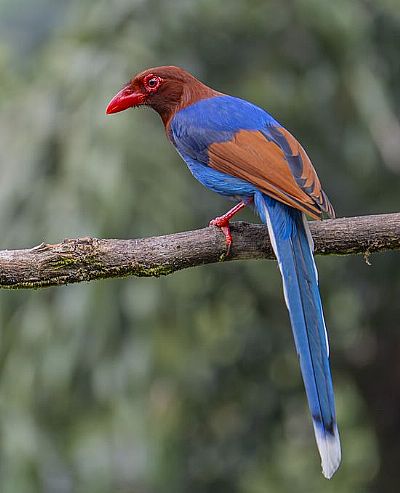
Blue Magpie
January 19th: Sinarajah
Daily 47 New 7 Running 253
Weather: Sunny and pleasant 25c
The group left the hotel early to a bird hide in the forest. At first light we waited and were rewarded with sightings of the rare endemic Sri Lanka Spurfowl, Sri Lanka Junglefowl and Emerald Dove. In the tea plantation which is surrounded by mature trees sightings of Sri Lanka Hanging Parrot, Black-capped and Square-tailed Bulbuls, Yellow-fronted Barbet, Sri Lanka Hill Myna, Yellow-fronted Barbet and a fly by Sri Lanka Woodpigeon. After breakfast additional species included Layard’s Parakeet, Legge’s Flowerpecker, Brown-breasted Flycatcher and Shikra. At 0900 hours we entered the forest interior with brief views of Sri Lanka Thrush as it flew across the path. A pair of ri Lanka Frogmouth were observed at their daytime roost. It was hard going at times but eventually we caught up with a mixed feeding flock which included Malabar Trogon, Red-faced Malkoha, Black-naped Monarch, Sri Lanka Drongo, Orange-billed Babbler and Indian Paradise Flycatcher. On the return journey similar birds so we headed to our lunch spot with a feeding station. The most numerous birds attending were Yellow-browed and Square–tailed Bulbuls, Sri Lanka Blue Magpie, Sri Lanka Grey Hornbill and a single Spot-winged Thrush. Later in the day a return to the forest where we had exceptional views of Red-faced Malkohas and Ashy-headed Laughingthrush the latter being a rare endemic to the island.
January 20th: Sinarajah, Colombo
Daily n/r New 0 Running 255
Weather: Warm and sunny with light NE winds 29c
The final day was a pre-breakfast visit to the feeding area outside Sinarajah. Similar birds were seen with better views of Layard’s Parakeet and Sri Lanka Hill Myna. Despite a lot of searching White-faced Starling continued to elude us abd was the only endemic not seen during the trip. The journey back to Colombo was slow along winding roads until we reached the expressway to Colombo and the hotel. We said our goodbyes to the driver and Thilanga who was an excellent for us.
