Orkney and Caithness 2026
Mark Finn
Photos: Jo Finn
April 5-12
This was an extensive trip of the Orkney Islands and an area of Caithness and Sutherland. Orkney in particular is poorly watched apart from the outpost of North Ronaldsay. Interesting species located on Orkney included Green-winged Teal, White-billed Diver, high numbers of Hen Harrier and Short-eared Owls and a marked passage of wildfowl. Further south a first year King Eider was seen at Loch Fleet. The next tour to Orkney is in April 2027
April 5th: Black Isle, Loch Fleet, Keiss Beach, Gills Bay, Pentland Firth, Kirkwall
Daily 44 New 44 Running 44
Weather: Rather windy with frequent rain and hail showers on a SW wind 7c
From the Black Isle I headed north on the A9 with the first stop at The Mound a part of Loch Fleet. Windy conditions made birding difficult although the first Osprey of the spring was seen along with several sightings of Red Kites. The high water levels put paid to any wader sightings. Next was a visit to the mouth of Loch Fleet in search of sea-ducks but the low water levels made this impossible apart from a pair of Red-breasted Mergansers. Our journey north took us through Wick and towards the beach at Keiss. Offshore and at close range Common Loon, Black-headed, Common, Herring and Great Black-backed Gulls and surprisingly a few Eurasian Wigeon, all the birds were feeding on plankton rising to the surface. The ferry time had been put back three hours at Gills Bay the departure point for Orkney. In the car park Pied and Grey Wagtails both of which are summer visitors. By the seawall a close we watched Red-throated Loon, Great Cormorant, European Shag and a party of Common Eiders. The ferry crossing was uneventful but the group recorded Manx Shearwaters, Northern Fulmars and Bkack-legged Kittiwakes in good numbers. On arrival we headed to our base in Kirkwall for the next five nights.
April 6th: Kirkwall, Peedie Sea, Finstown, Loch of Steness, Loch Harry, Marwick, The Loons, Rerwick, Loch of Tankerness
Daily 54 New 23 Running 67
Weather: Sunny spells and showers on a SW wind 9c
Our hotel is close to the Peedie Sea a freshwater loch near the sea. Always a good spot for ducks and we quickly located Long-tailed Ducks in various plumages, Common Goldeneye, Tufted Duck and Mallard. Finstown was next with a scan over the sea which was calm and attracted Horned Grebe, Great Cormorant, Grey Heron and very noisy Eurasian Oystercatchers. The Lochs of Steness and Harry are split by a road and offer excellent birding. On this visit large numbers of Mute Swans, Greater Scaup, Red-throated Loon and high numbers of Greylag Geese. I then headed towards The Palace and nearby Marwick Head and beach. A high tide roost of waders included Common Redshank, Ruddy Turnstone and Purple Sandpiper. Of interest were migrating Eurasian Wigeon and Eurasian Teal feeding on the sea. Offshore we noted Northern Gannet, Northern Fulmar, Black Guillemot and at least two pairs of Rock Pipits on the exposed rocks. The recently ploughed fields near Marwick beach held European Golden Plovers and Pied Wagtails and the sea similar birds to further east. The Loons has a hide overlooking a reedbed and shallow water. This area was attractive to Greylag and Pink-footed Geese, Little Grebe, Northern Shoveler, Common Coot, Common Moorhen and the first of several female Hen Harriers. The remainder of the day was at Rerwick a remote location with scattered houses which appeared to be abandoned or holiday homes. A bonus in this area was at least three Short-eared Owls, Common Buzzard and Common Pheasant the latter being rather patchy on Mainland Orkney. Last stop was at Loch of Tankerness with another owl and on the loch the usual wildfowl.
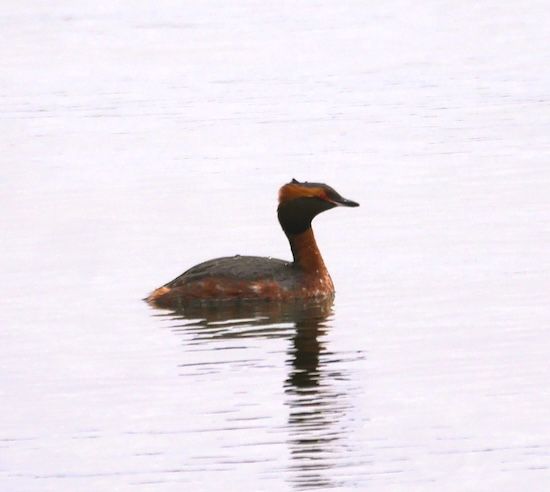
Slavonian Grebe
April 7th: Kirkwall, Tingwall, Rousay, St Peters Pool, Deer Sound, Keigar
Daily 49 New 9 Running 76
Weather: Sunny spells and occasional showers on a S wind 10c
Today I travelled towards Tingwall which is the ferry departure point for the island of Rousay. On the way we recorded the common and widespread species present on Orkney. The crossing gave us sightings of Northern Gannet, Black-legged Kittiwake, Great Cormorant, Common and Black Guillemots. On arrival on Rousay I went on the circular road around the island which traverses different habitats. The patches of old woodland held European Robin and the local race of Eurasian Wren. In the roadside habitats Meadow Pipit and Common Stonechat were seen and a Common Buzzard hunted the hillsides. In the flooded areas we located a Common Shelduck and offshore one of the first Great Skuas of the spring. Whist waiting for the ferry we heard a singing Dunnock in a garden. Back on the mainland a visit to Deer Sound and St Peters Pool with sightings of Long-tailed Duck, Common Goldeneye, Red-breasted Merganser and Common Eider. I made a few explorations on tracks where Ringed Plovers were observed and Sandwich Terns in the sound. At the end of the day a drive from Keigar to the road end with an abandoned farmhouse was productive for geese and ducks including a male Green-winged Teal.
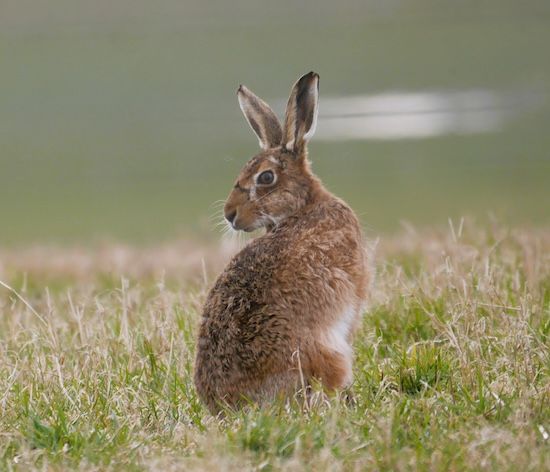
Brown Hare
April 8th: Kirkwall, Waulkmill Bay, Scapa Flow, South Walls, Rackwick, North Hoy, Finstown
Daily 52 New 7 Running 83
Weather: Cloudy with sunny spells on a SW wind 12c
After leaving Kirkwall I headed towards the ferry port at Houton via Waulkmill Bay. The sea was calm and the tide was middling making a good combination in locating birds. Offshore Common Loons were widespread and a single Black-throated Loon was located. The sandy bay held the commoner waders of Orkney so I pressed on to Houton for the ferry crossing across Scapa Flow to the remote and sparsely populated island of Hoy. From the ferry very high numbers of Common Loons and Black Guillemots along with Northern Fulmar, Great Black-backed, European Herring and Common Gulls. On arrival in Hoy I decided to visit the island of South Walls which is reached by a causeway. A garden with trees and scrub a scarce habitat in Orkney attracted scarce birds – Common Linnet, European Greenfinch, European Goldfinch and European Robin. Further along the road near a remote cemetery a male Northern Wheatear was seen the first of the spring. From South Walls the group headed north towards the remote village of Rackwick which is surrounded by steep cliffs and a narrow valley. A highlight was a female Merlin chasing Meadow Pipits. North Hoy held the familiar species plus a migrating flock of Pink-footed Geese. A journey back to Houton. The sea was calm which enabled us the see exceptional numbers of Common Loons (60+), Black Gulliemots (100+), Common Guillemot and Razorbill the latter in low numbers. A visit to Finstown added a Hen Harrier plus the common birds of Orkney occurring in gardens.
April 9th: Kirkwall, Peedie Sea, Bursay Moor, Birsay, The Loons, Loch of Skaill, St Marys, Tankerness (Yinstay Road)
Daily 61 New 9 Running 92
Weather: Cloudy with W winds 12c
A visit to Peedie Sea near our hotel had seen an increase in the numbers of Long-tailed Ducks and Common Goldeneyes. A bonus was the first Barn Swallows and Sand Martins hunting for insects over the water. Next was a visit to the hide at Bursay Moor which is accessed via a well made track serving the renewable sector. At the summit by the offices a party of three Redwings were noted feeding on the grass edges. From the hide the group located a single Red-throated Loon, Greylag Geese, Mallard and Tufted Duck. The road towards Birsay had a female Hen Harrier. The hide at The Loons was next on the agenda. From the hide we found at least four Black-tailed Godwits of the Icelanic race, Common Moorhen, Eurasian Coot, Northern Shoveler, Mallard, Eurasian Teal, Eurasian Wigeon, Gadwall, Common Snipe and at least two Water Rails calling from the reedbeds. I then headed towards Stromness via the water body of Loch of Skaill which is deep in nature and attracts diving ducks in good numbers. Of interest here was the declining and rare Common Pochard (one male), Tufted Duck, Common Goldeneye, Red-breasted Merganser and pairs of Mute Swans. Lunch was taken near the school in Stromness with Rooks and gulls for company with a pair of Lesser Black-backed Gulls for company. After lunch we went back to Kirkwall and on to St Marys a village near the Churchill Barriers. The enclosed bay gives shelter to the elements and we were rewarded with views of a first year Yellow-billed Loon and several Horned Grebes in breeding plumage, Common Goldeneye were also present both adult birds and juveniles. I ended the day in the Tankerness area and Yinstay Road which attracted Hen Harriers, Short-eared Owls and a female Eurasian Sparrowhawk.
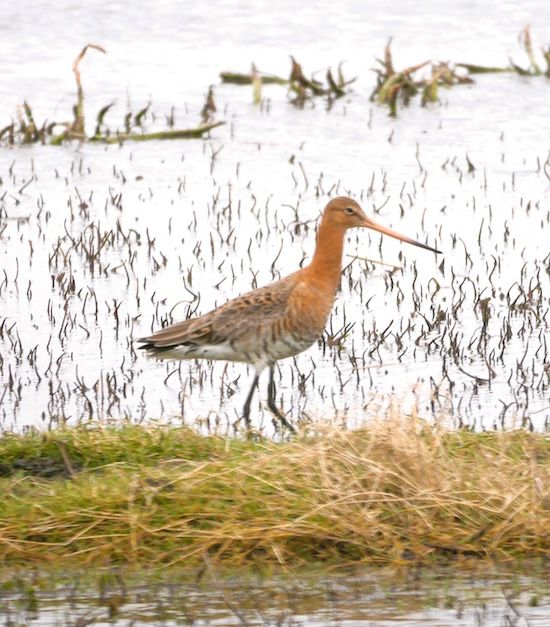
Black-tailed Godwit
April 10th: Kirkwall, South Ronaldsay, Dunnet Head, St John’s Pool, Dunnet Bay, Scrabster, Broubster Leans
Daily 56 New 4 Running 96
Weather: Sunny with W winds 12c
Before leaving Kirkwall I checked an area of willows and woodland which had a singing Willow Warbler. From here we headed south towards South Ronaldsay with the familiar and common birds of the islands present. The ferry back towards Gills Bay left on time. On arrival I headed to Dunnet the most northerly point in mainland Britain which has a habitat of steep cliffs and rough grassland. Most of the auk species had not arrived but we located Common Guillemot and Razorbill along with Northern Gannet, Black-legged Kittiwake and a hunting Peregrine Falcon above the cliffs. St John’s Pool was next on the agenda which is compact and attracts a wide range of birds. From the hide we had sightings of Black-headed and Common Gulls, Sandwich Tern, Gadwall, Northern Shoveler and Eurasian Teal. Dunnet Bay is close by and careful scanning into the bay added Long-tailed Ducks in loose flocks. On the beach a range of waders which included Ringed Plover, Ruddy Turnstone, Dunlin, Ruff and Common Redshank. Scrabster Harbour always has good birds and on this visit close encounters with Common Eider, Black Guillemot and Great Black-backed Gulls. Our last stop was Broubster Leans with high numbers of Whooper Swans, Common Buzzard and a newly arrived Osprey.
April 11th: Thurso, Durness, Balnakeil, Hope Valley
Daily 55 New 3 Running 99
Weather: Early rain followed by sunny spells on a SE wind 11c
Heavy rain showers in Thurso before I travelled west towards Durness. The road winds through spectacular scenery and along the coastline bordering the Pentland Firth. On arrival in Durness a visit to the seasonal water meadows and bay at Balnakeil. In the bay feeding Sandwich Terns and lingering Long-tailed Ducks. A walk towards the marsh added Northern Wheatear, Meadow Pipit and overhead migrating groups of Pink-footed Geese. From an elevated position the group located a flock of Barnacle Geese feeding in a grass field. In the wetter areas Gadwall, Northern Shoveler, Eurasian Teal, Northern Pintail, Mallard, Eurasian Wigeon, Dunlin, Black-tailed Godwit, Common Redshank and Little Grebe. A visit to the road leading towards Cape Wrath was productive for a group of migrating Redwings, Rock Pipit and hunting Common Buzzard. Hope Valley was next on the list with the adjacent mountains still having snow cover. On the road we located another Redwing and territorial European Robins. The wind was strong making birding tough at times. On Loch Hope we recorded up to ten Whooper Swans and a single Great Cormorant. The highlight was to come on the return journey when a male Merlin was observed displaying and calling near a storage area. A little further on we encountered Common Kestrels hovering and hunting for prey.
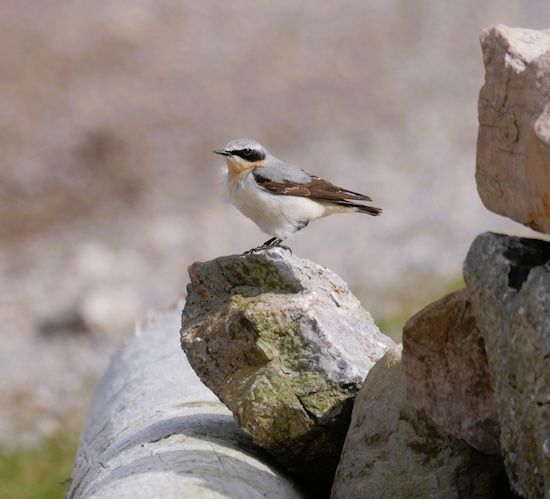
Northern Wheatear
April 12th: Sandside Bay, Forsinard, Brora, The Mound, Loch Fleet, Embo
Daily 62 New 4 Running 103
Weather: Rather mixed on a fresh S wind 10c
Our last full day in Northern Scotland with a visit to Sandside Bay and is a part of the Pentland Firth. On arrival I found a sheltered spot and scanned the bay and beach which resulted in sightings of Common and Red-throated Loons, Black Guillemot, Razorbill, Sandwich Tern and the common gull species. The drive through the flow country added at least two male Hen Harriers on territory and a group of European Golden Plovers feeding in a grass field. Next was a stop on the north side of Loch Fleet where the large Common Eider had an immature King Eider among the flock. A migrant Whimbrel called overhead but did not stop. Embo was our final stop with Common Scoter and Long-tailed Ducks offshore.
