Japan 2026
Mark Finn
Photos: Masakazu Kudada
May 27-June 14
This summer tour to Japan visited many remote islands of the country, inland forests and lakes and the beauty of Hokkaido in summer. A large range of unusual and rare breeding birds were observed plus a few surprise species we expected not to see. The weather played a major part in the first week with the effects of a typhoon running up the south coast. Thankfully this passed through quickly and resulted in only one day being lost due to flights being cancelled.
The following diary and bird lists should bring back many memories of an enjoyable and at times challenging tour for all of us.
May 27th: Tokyo, Ukishima, Hasaki, Choshi, Itaki
Daily 28 New 28 Running 28
Weather: Cloudy with fog on the coast. Wind ESE 26c
After picking up our vans in Tokyo we joined the congested road system running east towards Narita. A few birds around Tokyo included Common Myna, White-cheeked Starling, Black-eared Kite, Japanese Crow and a single Black-tailed Gull. Ukishima was the first stop where Oriental Reed Warblers were in full song along with Meadow Bunting, Marsh Grassbird and the scarce Ochre-rumped Bunting. The surrounding rice paddies were alive with Great, Medium and Little Egrets, Grey Heron. Hasaki was next on the list to visit but fog along the coast made things trickier. Despite this we managed to locate good numbers of Little Tern and Chinese Hwamie singing from exposed branches. The coast at Chosi was also affected by foggy conditions so I made for base.
May 28th: Itaki, Karuizawa
Daily 33 New 15 Running 43
Weather: Rather cloudy with mist at higher elevations, SE wind 26c
The group left Itaki and headed towards the winter resort town of Karuizawa with its habitat of forest, rivers and upland grass areas. The commoner birds were seen along the route with the exceptions being a Northern Goshawk and a Japanese Hawk Eagle. After lunch we set off for a circular walk at Karuizawa. The main entrance road held Narcissus Flycatcher, Japanese and Willow Tits, brief views of Japanese and Great Spotted Woodpeckers and Eurasian Wrens calling from the hillside. A slow walk towards the upper woodland held Eastern Crowned Warbler. At the top of the trail we heard Oriental Cuckoo and Blue and White Flycatchers. In the scrub near the visitor centre another Chinese Hwamie.
May 29th: Karuizawa, Saku
Daily 42 New 18 Running 61
Weather: Sunny with NW winds 24c
The hotel ground in Karuizawa is rich in birdlife and today was no exception. Near the reception area Barn Swallows were busy nesting. Just around the corner Daurian Redstarts with young were located. A walk towards the hotel entrance road produced sightings of Grey Wagtail, Eastern Buzzard, Varied and Japanese Tits, Meadow Bunting and Bull-headed Shrike. A return visit to Karuizawa was made concentrating on the main entrance track which is bordered by mature trees. Similar birds were seen with the addition of Narcissus Flycatcher and Japanese Thrush. In the afternoon I set off to the reservoir at Saku. On arrival the waters had dropped a little but we located Great Crested Grebe, Great Cormorant and Eastern Spot-billed Ducks. The nearby river with stony islands attracted Common Merganser, Little Ringed Plover and two Black-crowned Night Herons. On the way back to our hotel an area of rice paddies and farmland were visited. This area which is partly degraded added Chestnut-eared Buntings, Japanese Wagtail and Grey-capped Greenfinches.
May 30th: Karuizawa, Gotemba Trail
Daily 33 New 5 Running 66
Weather: Sunny with NW winds 24c
The hotel grounds held the usual birds with the exception of a Brown-headed Thrush and Little Grebes on the large pond. Our day was then spent travelling to Gotemba and exploring one of the ski stations at the foot of Mount Fuji. A large colony of Asian House Martins was nesting under a motorway bridge. Further up the trail Pacific Swifts were noted along with Japanese Leaf Warblers and Coal Tits.
May 31st: Gotemba, Mount Fuji
Daily 24 New 5 Running 71
Weather: Sunny with NW winds 2c
Today was spent exploring the higher elevation of Mount Fuji and its adjacent areas. The lower areas held Japanese Crow, Japanese Bush and Japanese Leaf Warblers, White-bellied Green Pigeon, Eurasian Wren, Coal Tit and Meadow Bunting. A trail near the summit was good for birds as we located Spotted Nutcrackers feeding on the ground, Red-flanked Bluetail, Goldcrest and Common Cuckoo. At the top a walk through the pine wood eventually added a Japanese Accentor sitting in a pine. It was time to head back towards Tokyo to drop off the vans and catch the ferry to Miyake-jima island.
June 1st: Miyake including Akakokko, Cape Izu
Daily 27 New 10 Running 81
Weather: Sunny and then cloudy with NW winds 28c
The ferry from Tokyo arrived on time at Miyake-jima Island where we were met by the hotel staff. Breakfast was served at 0730 hours so a walk near the hotel was productive for Lesser Cuckoos which appeared to have just arrived and a Meadow Bunting singing from a telegraph wire. The first birding spot was the extensive and mature forest at Akakokko surrounding a large lake. On arrival we quickly located Japanese Pygmy Woodpeckers (island subspecies), Warbling White-eye, Ijima’s Leaf Warbler a breeding endemic, and the scarce Owston’s Tit. The walk through the forest added the endemic Izu Robin. On the lake edge Great Egret, Grey Heron, Black-crowned Night Heron and Great Cormorant. Back to base and then out again at 1600 hours to Cape Izu with a habitat of bamboo scrub, rocky coast and views across the ocean to isolated islands and rock stacks. Off the land a Black-tailed Gull flew by and at least two Grey-tailed Tattlers called before disappearing out of sight. The best was to come with sightings of the rare and localised Styan’s Grasshopper Warbler, Japanese Bush Warblers perched in the open, Japanese Green Pigeons and several Lesser Cuckoos searching for suitable hosts. I ended the day at a disused port where a family of Eastern Blue Rock Thrushes was added to the bird list.
June 2nd: Miyake, Tokyo
Daily 23 New 5 Running 85
Weather: Overcast with occasional rain showers W wind 27c
Our last morning at Miyake was spent revisiting the forest and harbours of the island. All of the endemics were noted with the exception of the tit. In the harbour area a few Black-tailed Gulls were observed. The Tokyo ferry left on time and we were Seawatching shortly after our departure. The most amazing spectacle came off Chiba where we witnessed over 10000 Streaked Shearwaters with a few Short-tailed for company. Earlier in the voyage a single Bulwer’s Petrel and Black-footed Albatross were bonus birds for this time of the year. On entering Tokyo the wind and rain had increased due to the typhoon moving slowly up Japan’s Pacific coast. On June 3rd we had a delay due to weather conditions.
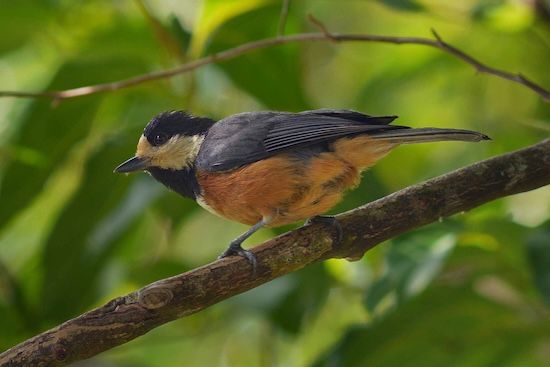
Amami Tit
June 4th: Tokyo, Amamioshima
Daily 20 New 11 Running 96
Weather: Rather mixed with sunny spells and showers on a SW wind 32c
It was a relief to leave Tokyo as we were delayed by the effects of the typhoon. The flight arrived at Amamioshima with Pacific Swallows flying around the buildings. I met up with the local guide and headed up to the nature centre with is situated in pristine forest. The trails here were excellent for Owston’s Woodpecker, Ryuku Robin and Lidth’s Jay which were all observed at close range. A few of us observed the scarce Japanese Paradise Flycatcher. It was time to go to Naze the main town on the island. On the way we had views of Ryuku Minivet. In the evening night drive in a remote area of the island which was productive for Ruddy Kingfisher, Amami Woodcock and Ryuku Scops Owl.
June 5th: Amamioshima, Ose Beach, Ishigaki
Daily 21 New 10 Running 106
Weather: Rain showers on a SW wind 31c
After a short stay due to weather conditions we headed back to the airport via Ose Beach an important staging post for birds heading north. The muddy areas were good for waders and included a summer plumaged Great Knot, Grey-tailed Tattler, Kentish Plover and Common Greenshanks. Offshore a bonus was a Gull-billed Tern plus Little Terns and on the rocks Pacific Reef Egrets. Inland we had views of a Ruddy Kingfisher perched on telegraph wires. Back to the airport and connecting flights down to Ishigaki which is closer to Taiwan. Later in the evening we had a night drive near the city. This was very good for close views of Ryuku Scops and Ryuku Hawk Owls and roosting Ruddy Kingfishers.
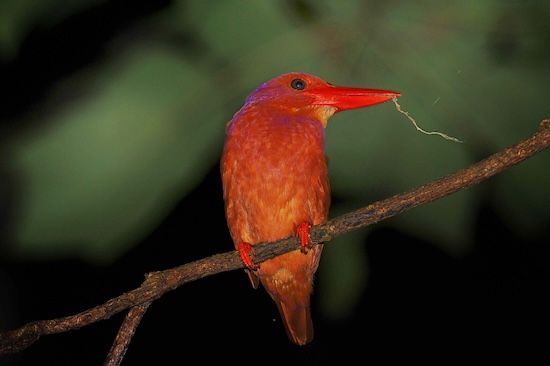
Ruddy Kingfisher
June 6th: Ishigaki
Daily 31 New 9 Running 115
Weather: Rain showers and late afternoon sunny spells. 30c on a SW wind
The morning did not look good as heavy rain and driving rain battered the area. Our first birding stop was an area of rice paddies on the outskirts of the city. White-breasted Waterhen were particularly common and male Common Pheasants strutting around the paddy edge. We then headed inland with sightings of Pacific Reef Egret, Grey Heron and Black-crowned Night Heron near the coast road. At an inland rice paddy close views of a juvenile Ryuku Serpent Eagle. Over the rice fields up to three Cinnamon Bitterns in flight and scarce birds including Chinese Pond Heron and Black-necked Stilts. At the end of day a visit to Banna Park added Ishigaki Tit and Ryuku Flycatcher. Before going back a visit to a paddy produced a party of Scaly-breasted Munias.
June 7th: Ishigaki, Okinawa
Daily 26 New 2 Running 117
Weather: Rather mixed with SW winds 31c
The morning was on Ishigaki with a visit to a dam near the airport. An Osprey was noted over a high peak and eventually views of Ryuku Flycatcher in a shady part of forest. It was time to fly north to Okinawa where the weather was poor. This resulted into localised flooding and a change of accommodation.
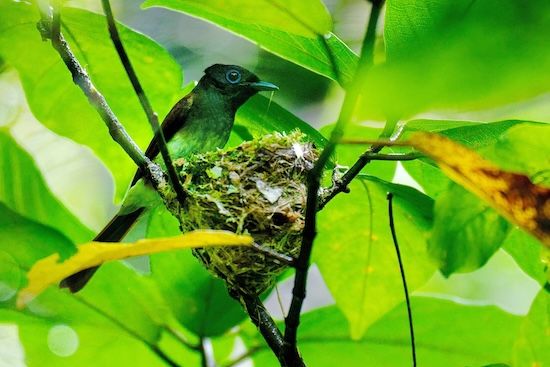
Japanese Paradise Flycatcher
June 8th: Okinawa including Yambaru NP, Ada Dam area and Kijoka Tabuka
Daily 24 New 3 Running 120
Weather: Rather mixed with rain showers and sunny spells. SW winds 28c
Thankfully the weather had improved overnight. On the way the group located Brown-eared and Light-vented Bulbuls, Warbling White-eye and Eastern Blue Rock Thrush. Yambaru is a national park and protects a large forested area of northern Okinawa. The first stop near Ada village added several Okinawa Rails and near the dam Okinawa Robins. In the forest itself we had sightings of Japanese Paradise Flycatcher, Ryuku Minivet, Ryuku Green Pigeon, Ryuku Flycatcher and Japanese Tit. After lunch a visit to a remote forest area of old and rotting trees added the critically endangered Okinawa Woodpecker. In the evening a night drive produced several Ryuku Scops Owls but little else due to weather conditions.
June 9th- 10th: Okinawa, Nemuro, Cape Nosappu, Onnemoto, Furen-ko, Ochiisi Harbour
Daily 52 New 23 Running 143
Weather: Sunny with a cool NW wind 13c
The 9th was a travel day from Okinawa to Kushiro on Hokkaido. On the 10th a short visit to Nemuro Harbour where Slaty-backed, Black-tailed and Glaucous Gulls, Pelagic and Japanese Cormorants and a pair of White-tailed Eagles were seen. Cape Nosappu was next on the agenda but before we arrived a coastal lake was very productive for Red-crowned Crane, Tufted Duck, Greater Scaup, Mallard, Northern Shoveler and Eastern Spot-billed Duck. At the cape a seawatch was productive for Red-throated Loon, Spectacled Guillemot, and Rhinoceros Auklet, dozens of cormorants and gulls. Onnemoto is nearby with the lagoon holding a male Garganey, Eurasian Teal, Eastern Marsh Harriers, Black-winged Stilt and Pacific Swifts. A walk around Onnemoto was excellent for Siberian Rubythroat, Amur Stonechat, Black-browed Reed and calling Middendorff’s Warblers, Siberian Long-tailed Rosefinch and Asian Brown Asian Brown Flycatcher. Lunch was taken at Furen-ko followed by a walk around the woodland. Japanese Tit and Japanese Bush Warbler were heard and a pair of Grey-bellied Bullfinch was seen by some. At the end of the trail Eastern Crowned and Sakhalin Leaf Warblers were observed along with Eurasian Nuthatches. Next up was the boardwalk at Furen-ko with singing Eurasian Skylarks, Black-backed Wagtail, Oriental Turtle Dove and a flock of late Eurasian Wigeon. Ochiisi Harbour was the last place to visit where the commoner species were observed.
June 11th: Nemuro, Cape Ochiisi, Cape Kiritappu
Daily 52 New 11 Running 154
Weather: Sunny with light NW and S winds, 14c
After breakfast I headed towards Cape Ochiisi and the boardwalk leading to the lighthouse. On arrival a displaying Latham’s Snipe. Just before the boardwalk a pair of Brown Shrikes showed well. On the walk we noted singing Olive-backed Pipit and Pacific Swifts in flight. From the lighthouse we had sightings of Japanese and Pelagic Cormorants. On the return walk sightings of Red-flanked Bluetail, Coal Tit, Eurasian Nuthatch, singing Lanceolated Warbler and Eurasian Wrens. It was time to visit my old friends at their house which is located within a forest area. All of us had great views of a female Blakiston’s Eagle Owl perched in a tree. In the afternoon the group birded along road 142 towards Kiritappu. The shallow ponds held Red-crowned Cranes, Middendorff’s Warbler, Reed Bunting, Siberian Rubythroat and the ever-present White-tailed Eagles. On arrival at Kiritappu harbour a group of Red-breasted Mergansers were noted. At the cape a surprise find in Ruddy Turnstone and a group of Harlequin Ducks. Offshore stacks attracted Japanese and Pelagic Cormorants, Slaty-backed and Black-tailed Gulls and passing Rhinoceros Auklets and a lone Pacific Diver.
June 12th: Nemuro, Notsuke Hando, Rausu, Shiretoko Pass, Abashiri
Daily 43 New 7 Running 161
Weather: Sunny with light S winds 16c
Today the group headed in a northerly direction adjacent to the Sea of Okhotsk. The first birding destination was the long spit of Notsuke Hando which always attracts interesting species all year round. Near the entrance road we heard the distinctive songs of Sakhalin Warbler which is a notorious skulker and hard to observe. Common species included displaying Latham’s Snipe, White-tailed Eagle, Pacific Swift, Amur Stonechat and Grey-capped Greenfinch. At Notsuke Hando a large flock of migrant Grey Herons included at least three Eurasian Spoonbills the latter being well out of range here but they breed in nearby Russia. On the sea close views of Black Scoter and a fly-by Pacific Loon. The reeds and grassland next to the road held the eastern race of Reed Bunting and the scarce Chestnut-cheeked Starling. A highlight for many was close views of Siberian Long-tailed Rosefinch, Common Cuckoo, Russet Sparrow and a pair of Whooper Swans. Our journey passed through Rausu and along the Shiretoko Peninsula with sightings of Bull-headed Shrike, Japanese Bush Warbler, Grey and Black-backed Wagtails. On the return to Rausu close views of Rhinoceros Auklets fishing for small fish with gulls. Shiretoko Pass is a spectacular road with fantastic vistas of the surrounding forest and mountains. A stop here had a perched Oriental Cuckoo, Masked Bunting and a Hawfinch, the latter a rare breeding bird of Hokkaido. Time was running away as we travelled to Abashiri our last base on Hokkaido.
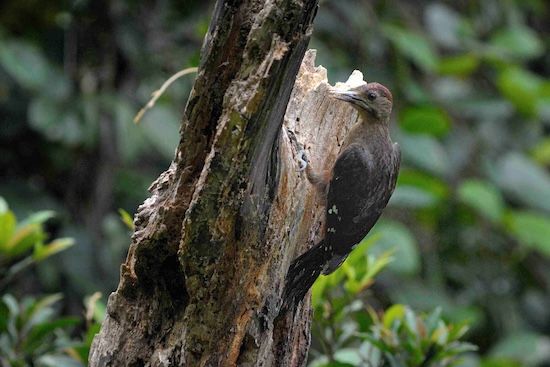
Pryer’s Woodpecker
June 13th-14th: Abashiri, Tofutsu-ko, Tokyo, flights to Europe on the 14th
Daily 36 New 5 Final 166
Weather: Sunny with thunderstorms later on a S wind 22c
A beautiful day as we went to search Tofutsu-ko a large wetland area east of Abashiri. The small pools held Gadwall an uncommon breeding bird and in the reedbeds Chestnut-eared and Reed Buntings and a pair of Red-crowned Cranes. Along the road close Sakhalin Warblers giving their loud and noisy songs with brief flight views obtained. At the parking lot we had fantastic views of the uncommon Lanceolated Warbler perched in a bush before it dropped into cover and ran away. A section of the river system had areas of exposed mud which attracted one Eurasian Curlew and two Far Eastern Curlews and a single Eastern Black-tailed Godwit. The light was poor but on reflection two curlew species were present (this was later confirmed by the park ranger). Back to Abashiri with a Mandarin Duck on the river the final bird of the trip. The flight back to Tokyo ran smoothly where we transferred to a nearby hotel for the night.
