Ireland 2026
Mark Finn
Photos: Charlie Cowan
September 1-9
This was our annual birding tour to Ireland which was earlier in the year to take in the exceptional seabird passage plus a good selection of waders. Bridges of Ross and Loop Head were excellent with close views of several uncommon to rare species including Greater and Sooty Shearwaters, Sabine’s Gull, Leach’s Storm Petrel and many others. Waders were concentrated in the many estuaries of the west and south of Ireland and included Pectoral Sandpipers. A bonus on the trip was a Pacific Diver located in a coastal area close to Kilkee. Passerine migration was poor due to the wind directions in many areas. The following report should bring back many memories of an excellent birding tour. The next tour to Ireland is in October 2027
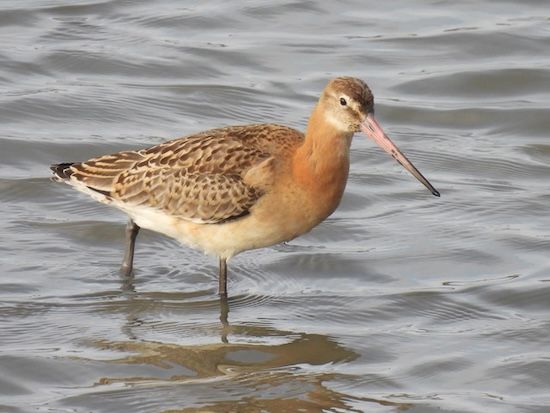
Black-tailed Godwit
September 1st: Dublin, Shannon Airport Lagoons, Islandavanna, Kilkee
Daily 41 New 41 Running 41
Weather: Rather mixed with light NW winds 17c
The group met up in Dublin and then travelled westwards towards Shannon Airport and the nearby estuary and wetlands. The journey through central Ireland was fairly uneventful with sightings of the commoner species. At 1240 hours I parked up at the golf club and walked around the marsh and adjacent estuary. The receding tide revealed a rich source of food which attracted hundreds of Black-tailed Godwits of the Icelandic race, Eurasian Oystercatcher, Common Redshank, Ringed Plover and a few Black-headed and European Herring Gulls. The vast reedbeds held little apart from a pair of Reed Buntings, Common Stonechats and Grey Herons. On reaching the pier offshore rocks had Great Cormorant, Hooded Crow and a lone Sandwich Tern. The walk back towards the airport allowed us to scan the water of the lagoon. In this habitat we located Little Grebe, Mute Swan, Mallard, Eurasian Teal and a female Northern Shoveler, Common Moorhen, Common Coot and a calling Water Rail. Back to the car park with a few Barn Swallows and a single Sand Martin, and in the trees a singing European Robin and Blue Tit. The next stop was another sector of the Shannon Estuary at Islandavanna where the tide was very low exposing vast tracks of mud. The group located similar birds to Shannon with the addition of Lesser Black-backed Gull and Little Egret. The weather had started to worsen as I headed towards the coastal town of Kilkee our base for three nights.
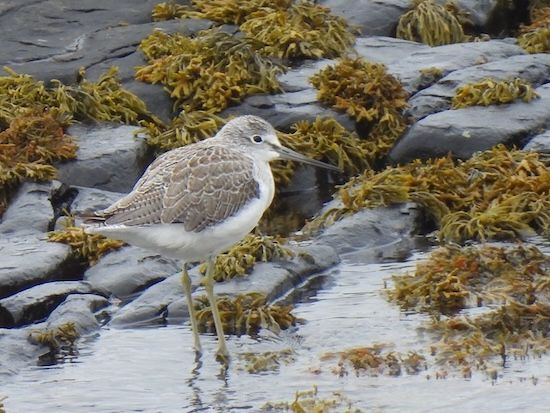
Common Greenshank
September 2nd: Kilkee, Bridges of Ross, Doonbeg, Seafield
Daily 50 New 22 Running 63
Weather: Mostly cloudy with SW winds 16c
After breakfast I headed towards The Bridges of Ross which is probably the best Seawatching site in Europe. On the way we encountered the first party of migrant Meadow Pipits and a pair of Common Stonechats. In the fields a few native Rock Doves were feeding with several groups of Red-billed Choughs. On reaching Bridges of Ross the footpath and adjacent fields harboured a large flock of Common Linnets, Rock Pipit and migrant Barn Swallows. At around 10am the first Seawatching session produced a single Great Shearwater, up to twenty Cory’s Shearwaters, large formations of Northern Gannets of all ages, Northern Fulmar and on the rocky foreshore Ruddy Turnstones. Back to Kilkee and onto the coastal village of Doonbeg where we consumed lunch watching waders at close range which included Common Greenshank, Common Redshank, Dunlin, Bar-tailed and Black-tailed Godwits, Eurasian Oystercatcher, Little Egret and a few Black-headed and Great Black-backed Gulls. Next on the agenda was Seafield an area of lakes, shore and sea. At the end of the road a freshwater loch attracted several Mute Swans and Common Coots but little else of note. At Seafield the tide was low which attracted a range of waders including up to five Curlew Sandpipers, Eurasian Curlew, Ringed Plovers and Dunlin. A short foray further north was curtailed due to low cloud and murky conditions.
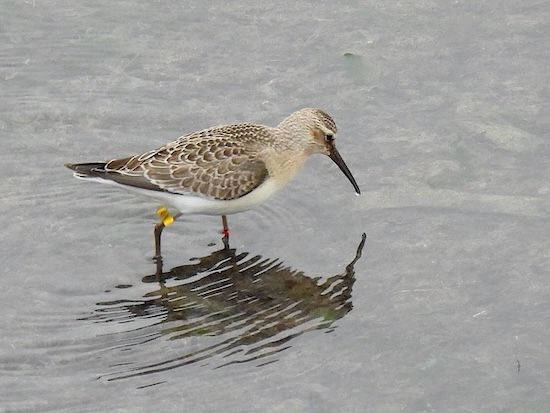
Curlew Sandpiper
September 3rd: Kilbaha, Loop Head, Bridges of Ross, Carrigahalt, Poulnasherry Bay
Daily 52 New 8 Running 71
Weather: Cloudy conditions followed by heavy showers (pm), SW Wind 16c
Today I went to the coastal village of Kilbaha with sightings of the commoner birds en route. The tide at Kilbaha was high and attracted wading birds including Greenshank, Ringed Plover and Ruddy Turnstone. Loop Head is a short distance away with the walls attracting Meadow and Rock Pipits, Common Linnet and a single Northern Wheatear of the Greenland race. A short seawatch commenced as the birds were passing fairly close to the head itself. High numbers of shearwater species included Manx and Cory’s, Northern Fulmar, Northern Gannet, Sandwich Terns and the first Common Guillemots of the trip. It was time to visit the Bridges of Ross again and the group were treated to a seabird spectacular. The birds were close including Great, Sooty, Manx and Cory’s Shearwaters, Northern Fulmar, Leach’s Petrel, Sabine’s Gull, Northern Gannet, European Shag, Great and Arctic Skuas and Sandwich Terns. Lunch was taken followed by a visit to Carrigahalt a sheltered bay with a quay and old buildings. The walls held nesting Barn Swallows and House Martins in high numbers. In the bay itself we located a wintering Pacific Loon which was identified by several distinct features. At the end of the day Poulnasherry Bay was explored where the commoner waders were present. An eventful and enjoyable day was had in County Clare.
September 4th: Kilkee, Littor, Beale, Meenogahane, Blennerville, The Gearagh
Daily 64 New 14 Running 85
Weather: Cloudy with sunny spells on a SW wind 17c
Today I left Kilkee and made the journey to catch the ferry across to Kerry. The usual birds on the way plus a pair of Collared Doves near the ferry terminal. The first birding spot in Kerry was the narrow sandy beach at Littor which held a party of Sandwich Terns, Black-tailed and Bar-tailed Godwits and a few Ringed Plovers. Further west the strand at Beale had similar birds. Meenogahane is a fishing village with a pier with vistas towards Loop Head. A short survey of the sea produced sightings of Manx Shearwater, Great and Arctic Skuas, Black-legged Kittiwakes and Northern Fulmars. The regional town of Tralee is close by and the birding hot-spot of Blennerville. It was rather windy here but the tide was turning which enabled us to study waders at close range. Interesting species included Red Knot, Common Greenshank, Grey Plover, White and Pied Wagtails and a female Common Kestrel. Our last stop was the flooded forest at The Gearagh a nature reserve in the Lee Valley. Several species were seen and added to the list including Great Crested Grebe, Greylag Goose, Great Egret, Common Snipe, Northern Lapwing, a first year Peregrine Falcon and in the woodland Long-tailed and Great Tits and a calling Goldcrest.
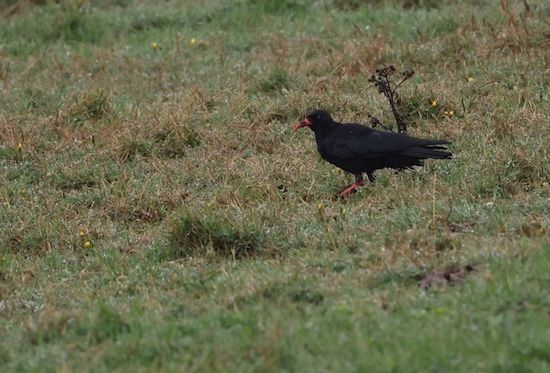
Red-billed Chough
September 5th: Lissagriffin, Mizen Head, Goelenmarsh, Rosscarbery, Kilkernan Lake, Galley Head
Daily 59 New 4 Running 89
Weather: Sunny am then cloudy with rain showers on a S wind 16c
A day spent birding in the wild country of West Cork starting with Lissagriffin a shallow lake. On arrival a careful scan revealed high numbers of waders with Dunlin, Red Knot and Common Greenshank being present along with a party of Common Snipe. A few Mallard, Eurasian Wigeon and Eurasian Teal were present on the reed edge. Mizen Head was next on the agenda with the commoner seabirds offshore and Red-billed Choughs on the cliffs. The gardens today were quiet for birds so we pressed on to the relatively unknown Goelenmarsh. The group were amazed by the high number of migrant waders particularly Common Greenshank, Black-tailed Godwit, Ringed Plover and Common Redshank. After a little searching Mike located a Pectoral Sandpiper standing next to a Curlew Sandpiper. In the taller trees Charlie heard a Common Chiffchaff the first warbler of the trip. Further east we made a visit to the mudflats and grass islands of Rosscarbery a great place for observing gulls and waders. All the regular waders were present plus a single Common Kingfisher. A careful scan of the gull flock added two adult Mediterranean Gulls and good numbers of Lesser Black-backed Gulls. Our luck continued at Kilkernan Lake where a Black Tern put on a show for us. I drove up to Galley Head but nothing of note was seen.
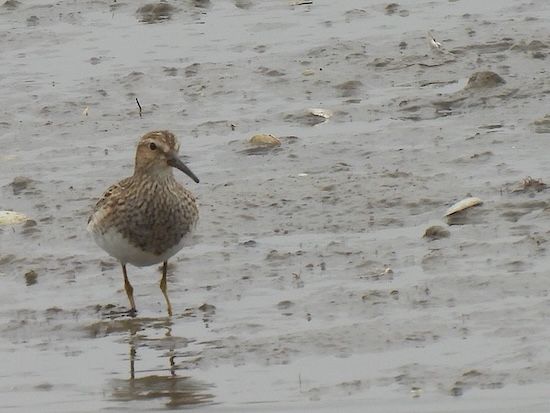
Pectoral Sandpiper
September 6th: Cape Clear Island, Rosscarbery
Daily 43 New 2 Running 91
Weather: Overcast with steady showers on a SW wind 16c
Today we made a visit to the migration hotspot of Cape Clear which is accessed by boat from Baltimore. The crossing held the commoner seabirds of the Irish coast and we landed on time at 1100 hours. The weather was poor with low cloud, drizzle and light winds which made birding difficult. A walk towards the westward side produced a few birds including a group of Rock Pipits near the youth hostel and the first Dunnocks of the tour. After lunch a walk towards the harbour had a Common Chiffchaff singing near the cemetery. At 1600 hours back to the mainland and to Rosscarbery. Birds were similar to yesterday’s sightings with the additional of three juvenile Gadwalls.
September 7th: Harpers Island, Ballycotton, Knockadoon Head, Ballyhonock Lake
Daily 56 New 3 Running 94
Weather: Cloudy with showers on a SW wind
After departing from Bandon we passed through Cork to visit the reserve at Harpers Island. On arrival the tide was out leaving large areas of mud and water in the gullies. The usual wading birds and gulls were present with a single Common Sandpiper feeding in the grass areas. Ballycotton was next on the agenda an upmarket seaside town overlooking a sandy bay and beaches. The island which has the lighthouse held large numbers of Great Cormorant and European Shags. Our main interest was the beach where the high tide roosts held good numbers of Mediterranean Gulls and Sandwich Terns. Lunch was taken at Knockadoon Head with a few birds in the gardens. The last stop at Ballyhonock Lake held Common Moorhens and in the fields a flock of finches which included Common Chaffinch, European Greenfinch, European Goldfinch, Common Linnet and Yellowhammer. It was time to press on to Wexford our last base in Ireland.
September 8th: Tacumshin, Lady’s Island, Rosslare Back Strand
Daily 58 New 3 Running 97
Weather: Sunny with occasional showers. W wind 17c
Tacumshin was the first birding stop today and one of the most important sites in Ireland. The area is difficult to access with reedbeds, water areas and thick mud surrounding the main lake. In the parking area Jo located migrant Willow Warblers feeding in a bramble bush. Out on the lake we observed the commoner gulls, Common Moorhen, Common Coot and a few pairs of Gadwall. Due to access problems another area was checked with similar results. I decided to head towards Lady’s Island a well known birding which is close by. On arrival the island held Black-headed, Herring and Mediterranean Gulls, Common Redshank, Common Greenshank, Ruff, Ringed and Little Ringed Plovers, Black-tailed Godwit and a lone Common Snipe. Little Egrets and Grey Herons were common around the lake edge in addition to Northern Lapwings, a single Common Kingfisher and a few Greylag Geese. I decided to check Rosslare Back Strand and the wader roost which was impressive with high numbers of the more widespread species, Ruddy Turnstone, Bar-tailed Godwit and Common Redshank. It was time to go back towards Tacumshin where a sheltered spot attracted up sixty Little Grebes, Gadwall and impressive counts of Mute Swans
September 9th: Kilcoole, Dublin, Belfast
Daily 49 New 4 Final 101
Weather: Sunny with light SW winds 16c
I checked out at Wexford and headed north towards the coastal town of Kilcoole which has a coastal nature reserve adjoining the Irish Sea. Charlie was waiting to meet us by the railway station and we set off along the beach to view the lagoons and fields plus the sea. The now familiar birds were present in the fields and lagoons including good numbers of Northern Lapwings and recently arrived European Golden Plovers. In the sea a small group of winter plumaged Razorbills and a single Sandwich Tern. Mike located a Great Spotted Woodpecker in the top of a dead pine tree. The journey north went smoothly despite heavy traffic around Dublin and Belfast.
