Canada 2026
Edmonton, Yellowknife and Cambridge Bay
Mark Finn
Photos: Keith Williams
June 24-July 4
This was the second year running that we have operated the tour to some of Canada’s most remote regions. Edmonton was suffering after heavy rainfall which made our visit to Tofield being in the balance. The weather helped dry out habitats and we were treated to fantastic views of many birds near Tofield. The highlights being out of range Marbled Godwits and a wide range of waterfowl. Further north at Yellowknife the weather was rather hot for the region. We had several good birds along the Ingraham Highway which involved a few warblers and attentive Canada Jays. The High Arctic habitats in around Cambridge Bay in Nunavut again came up trumps with good numbers of most species. An unusual record was a male Barn Swallow on the road to Mt Pelly. All the specialties were seen around Cambridge Bay which was a rewarding experience for all.
I am sure the following report and bird list will help bring back happy memories of an enjoyable tour.
The next departure to this fascinating area of Canada is late June 2027
June 24th: Grey Nuns White Spruce Park, Township Road 564, Boisvert Greenwoods
Daily 44 New 44 Running 44
Weather: Sunny and clear on a light S wind 26c
The group assembled at 0900 hours to commence on a birding tour in NW Canada. Grey Nuns White Spruce Park is located north of Edmonton near the small town of Riverside. Along the way we recorded several Red-tailed Hawks, American Cliff Swallows and American Crows. On arrival the grassy areas with bushes and exposed sticks attracted Song and Clay-coloured Sparrows, Northern Yellow Warbler and an American Robin singing from a dead tree. Overhead we quickly located Osprey, Bald Eagle and dozens of breeding plumaged Franklin’s Gulls. A slow walk on the well maintained paths added sightings of Cedar Waxwing, Gray Catbird, Black-capped Chickadee and Alder Flycatcher. A pair of American Wigeon was present on a pond. Picked up supplies and headed north to visit Township Road 564. The flooded fields were a magnet for birds with sightings of American Coot, Eared and Horned Grebes, Mallard, Gadwall, Northern Shoveler, Northern Pintail, Blue-winged Teal, Lesser Scaup, Redhead, Canvasback and Ruddy Duck. In the fields White-faced Ibis, Black-billed Magpie, Red-winged Blackbirds and overhead Franklin’s Gulls and a single Ring-billed Gull. A grassy field added a pair of Lesser Yellowlegs before arriving at Boisvert Greenwoods a remnant path of boreal forest. The birding here was tough with singing Red-eyed Vireo and views of Northern House Wren, Common Yellowthroat in a nesting box and Tree Swallows flying around after insects.
Mammals: Jack Rabbit (1), Red Squirrel (2)
June 25th: Elk Island NP including Amisk Wuche, Asonsin Lakes, Beaver Pond Trail
Daily 44 New 16 Running 60
Weather: Sunny with light S winds 27c
This morning I headed north and east in order to visit Elk Island NP. On the way flooded fields were attracting American Black Terns hawking for insects. Our first birding stop in the park was along the Amisk Wuche trail with the entrance lakes attracting the first f many Red-necked Grebes, Bufflehead and Eastern Kingbird. In the parking lot a Pileated Woodpecker was seen in flight. The path passes through woodland, marsh and scrubby habitats. The first section of marsh added Song, Swamp and Clay-coloured Sparrows, Northern Yellow Warbler and Common Yellowthroat. A dead tree attracted Downy Woodpecker and in adjacent forest singing Red-eyed Vireos. In the marsh we located calling Sora Rails and on a boardwalk much to my surprise a pair of endearing American Avocets. Our walk through the forest had singing Ovenbirds and Northern House Wrens and in the more open areas Least Flycatchers. A large dead tree had Hairy Woodpecker, and in the parking area a pair of Western Wood-peewees. It was time to look at Asonsin Lake a large body of water which had American White Pelican, Double-crested Cormorant, Lesser Scaup, Gadwall and a female Common Goldeneye. On the other side of the lake Eastern Phoebe near the theatre. Last stop was along Beaver Pond Trail with similar birds to the morning session.
Mammals: Red Squirrel (5), Richardson’s Ground Squirrel (2), Coyote (2), Plains Bison (6)
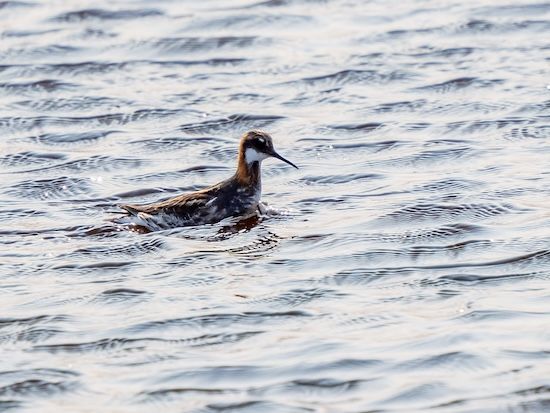
Red-necked Phalarope
June 26th: Tofield, Road 626, Hermitage Park
Daily 56 New 17 Running 77
Weather: Sunny with a E wind 28c
Recent flooding in Tofield meant a sense of anguish when visiting this area for birdlife. The town is mainly reliable on agriculture but is situated in a flood plain area of Alberta. On arrival we visited a small lake surrounded by stands of reed and scrub. In the reeds we quickly located the localised Yellow-headed Blackbird, Red-winged Blackbird and a Sedge Wren which showed well on a reed mace. In the open water areas American White Pelican, American Coot, Northern Shoveler, Canvasback, Redhead and Green-winged Teal. A male Merlin flew over causing panic among the smaller birds. A few Ring-billed and Franklin’s Gulls were loitering on the lake edge. On the outskirts of Tofield a Purple Martin house held around six birds a scarce species in Alberta. It was time to visit Road 626 which always produces good birds and on this visit the flooded fields and lush grasses attracted large numbers. In the first sector a fence line and bushes held Clay-coloured and Savannah Sparrows, Eastern Kingbird, Brewer’s Blackbirds and a Red-tailed Hawk. A large field which was flooded in parts was attractive to many species (several hundreds of birds). In the muddier sections large numbers of Northern Pintail, American Wigeon, Gadwall, White-faced Ibis and Franklin’s Gulls. Careful searching also revealed Black-necked Stilt, Marbled Godwit, Wilsons Phalarope, Wilsons Snipe, California Gull, Western Meadowlark and Bobolinks. A remarkable area for birds and on exiting we found a pair of Cinnamon Teal. I then went back to Edmonton and a visit to Heritage Park. The more common ducks were around and in the wooded areas we could hear Blue Jays and close views of Red-eyed Vireos.
Mammals : White-tailed Deer (2)
June 27th: Edmonton, Yellowknife, Willow Flats, Lake Niven
Daily 30 New 12 Running 89
Weather: Warm and sunny with E winds 29c
An early departure from Edmonton to Yellowknife which is located in the remote NW Territories. The first birding stop was at Willow Flats where a boardwalk runs through the marsh and offers views of Great Slave Lake. In the bare trees we observed singing White-crowned Sparrows and Yellow Warblers. Further on a singing Northern Waterthrush, Song and Lincoln’s Sparrows. In the lake several gulls were present including American Herring, California and Short-billed. After lunch I made the short drive to visit Lake Niven an important area for birds in Yellowknife. On the open water Red-necked and Horned Grebes, Bonaparte’s Gull, Lesser Scaup, American Wigeon, Redhead and Canvasback. A walk around the lake added the commoner species plus Ruby-crowned Kinglet and Myrtle Warblers.
June 28th: Yellowknife, Ingraham Trail including Yellowknife River, Madeline and Pontoon Lakes, Powder Lake, Cameron Falls and River, Lake Tibbit
Daily 42 New 11 Running 100
Weather: Hot and sunny with SE winds 29c
A later departure time today was due to restaurant restrictions on a Sunday. After picking up supplies I headed along the Ingraham Trail which has been made famous by the Ice Road Truckers. The first stop was at the Yellowknife River where a Bald Eagle was perched on a telegraph pole. In the river we had a few sightings of Greater Scaup and American Wigeon. The campground always has a few good birds with a pair of Hairy Woodpeckers feeding young, Chipping Sparrow and American Cliff Swallows nesting under the bridge. The highway passes several ponds where we located Ring-necked Duck, Red-necked Grebe, Spotted Sandpipers and the first Common Loons of the trip. Pontoon Lakes was excellent with the parking lot having Northern Flicker, Tennessee and Orange-crowned Warblers plus a pair of the shy and retiring Boreal Chickadees. On exiting the lot a party of Canada Jays showed briefly but we caught up with them again at lunch time. A male Western Wood-peewee was seen singing at another lake location. Cameron River had a pair of Buffleheads. The shallow lakes before Lake Tibbit were productive for nesting California Gulls, Greater and Lesser Yellowlegs and a single female Surf Scoter.
Mammals: Snowshoe Hare (1), Muskrat (1)
June 29th: Yellowknife including Yellowknife Airport area, Lake Vee, Kam Lake, Rat Lake
Daily 38 New 5 Running 105
Weather: Hot and sunny with SE winds 29c
Our last full day started with a pair of Dark-eyed Junco near the city centre. After picking up supplies and checking flights with the airport I visited a few locations on the road south to Hay River. The habitat is very boggy with small pools and scrub where we heard the uncommon Le Conte’s Sparrow giving its wheezy song. The pools held the commoner wildfowl species and several pairs of Red-necked Grebes. It was time to explore the forest towards Lake Vee which held the commoner warblers and a party of Boreal Chickadees taking caterpillars from pine trees. Kam Lake was next although difficult to access with sightings of Horned Grebe, Arctic Tern, American Wigeon and Green-winged Teal. The reeds had a variety of blackbirds including Red-winged, Rusty and Common Grackles. Last stop was at Rat Lake where Bonaparte’s Gulls were nesting in pine trees. On the lake a variety of ducks included several Canvasback. The weather by now was very hot so I called it a day and returned to base.
June 30th: Yellowknife, Cambridge Bay including the dump
Daily 24 New 13 Running 118
Weather: Warm in Yellowknife and cooler at Cambridge Bay on a W wind 19c
Today was a travel one to Cambridge Bay which is located on Victoria Island in Nunavut. The flight was delayed in Yellowknife and left forty minutes late. En route a stop at Kugluktuk had a surprise bird in an American Robin a long way out of its normal range. On arrival in Cambridge Bay we went to our lodge and settled in. A trip into town for supplies and afterwards a short drive towards a pumping station and a part of the town dump. En route to the pumping station we located King Eider, Long-tailed Duck, Cackling Goose, Red-necked Phalaropes and a pair of the uncommon Yellow-billed Loons. In the tundra we had sightings of Snow Bunting and a pair of Baird’s Sandpipers. A short visit to the pools near the dump was productive for Sabine’s and Glaucous Gulls, Semipalmated Sandpiper, Semipalmated Plover and several pairs of Northern Pintails.
Mammals: Red Fox (1), Arctic Fox (1), Arctic Hare (1)
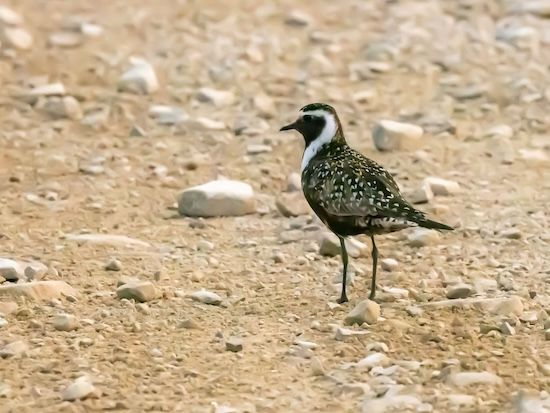
American Golden Plover
July 1st: Cambridge Bay including West Arm, Dump, Mt Pelly Road
Daily 30 New 12 Running 130
Weather: Mixed with sunny spells and showers. NW wind 14c
This morning I checked the water-font at Cambridge Bay which held good numbers of Common and King Eiders, Red-necked Phalarope, White-crowned Sparrow, Lapland Longspur and Snow Bunting. The road passes the airport and roughly runs adjacent to the coast where patches of it were still ice-bound. In the first pool sightings of Red-throated and Pacific Loons, Greater White-fronted Goose, American Golden Plover, Horned Lark and American Pipit. Further along the track a pair of Long-tailed Skuas and a fly-by Yellow-billed Loon. Back to base for lunch and at 1530 hours a revisit to the dump area. Similar birds were present to yesterday although the willow scrub attracted Common Redpolls. Our day ended along a fast-flowing river with the edges attracting Least and Baird’s Sandpipers and close views of Long-tailed Skuas. I travelled to an elevated section of the Mt Pelly road which gives views into adjoining lakes. This was productive for single Snow and Brent Geese, nesting Glaucous Gulls and a Sandhill Crane.
July 2nd: Cambridge Bay including Mt Pelly Road
Daily 27 New 4 Running 134
Weather: Sunny with a brisk SE wind 15c
The wind had racked up today making it harder to find birds on the tundra landscape. The commoner birds were present in the town and on the many lagoons and shore. The first stop was at a weekend house overlooking a lake and grassland. Tundra Swans were located with many being paired up for the breeding season also in the area were Long-tailed Skua, Sandhill Crane and Greater White-fronted Geese. The road winds its way slowly to Mt Pelly which stands at around 610m in height. On the way a highlight was a pair of Grey Plovers in breeding plumage with Baird’s and Semipalmated Sandpipers. After lunch a slow drive back to Cambridge Bay with sightings of the uncommon Stilt Sandpiper, Horned Lark and an out of habitat White-crowned Sparrow.
Mammals: Arctic Hare (1)
July 3rd: Dewline Road
Daily 26 New 1 Running 135
Weather: Warm and sunny with W winds 22c
A rather unseasonal warm day lay ahead of us as we explored the Dewline Road in the morning and late afternoon. The road has sections passing near lagoons, dry rocky areas and patches of willow scrub. The common birds of Cambridge Bay were abundant with high numbers of Greater White-fronted Geese, King Eider and Long-tailed Duck. The pools and grassy areas were good for Semi-palmated and Stilt Sandpipers and a single Pectoral Sandpiper the latter species being a scarce breeding of Victoria Island. The smaller pools attracted many Red-necked Phalaropes. After returning for lunch we visited the Dewline Road with sightings of Rough-legged Buzzard and American Golden Plovers.
Mammals: Arctic Fox (2)
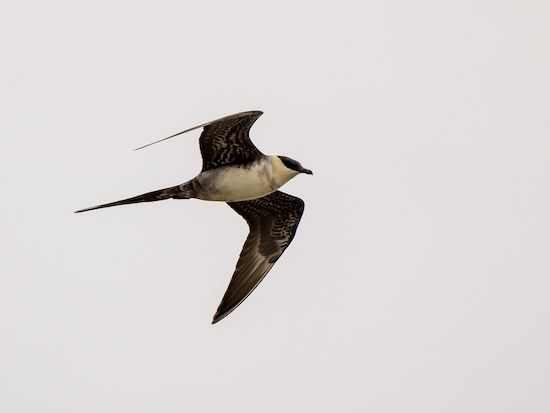
Long-tailed Skua
July 4th: Cambridge Bay including The Dump, Mt Pelly Road
Daily 27 New 2 Running Final 137
Weather: Cloudy with afternoon showers on a NW wind 19c
Our last day birding was in and around Cambridge Bay and the Mt Pelly road. The dump had high numbers of King Eider and Red-necked Phalaropes. On the way to Mt Pelly a stop at a riverside location produced our only Arctic Skua of the tour and close-up views of Long-tailed Skuas. The roadside ponds had similar birds to a few days ago with an increase in Tundra Swans and Semipalmated Sandpipers. An unusual sighting was a male Barn Swallow which appeared well out of range and no doubt had arrived on south-west winds. The second of two bridges produced the best birds as close views of Arctic Tern, Sabine’s Gull and Glaucous Gull were obtained. Near the end of the road a female Stilt Sandpiper with four chicks was a welcome and surprising sighting. Nothing new was added as the return to base was made.
